
2026-05-16
Heat Pump Hot Water on the Capricorn Coast: Plumber's Guide
Honest plumber's guide to heat pump hot water on the Capricorn Coast — from $5,200 installed, Zone 1 STC rebate reality, Tariff 33 sizing, brands we fit.
Heat Pump Hot Water on the Capricorn Coast: A Plumber's Complete Guide
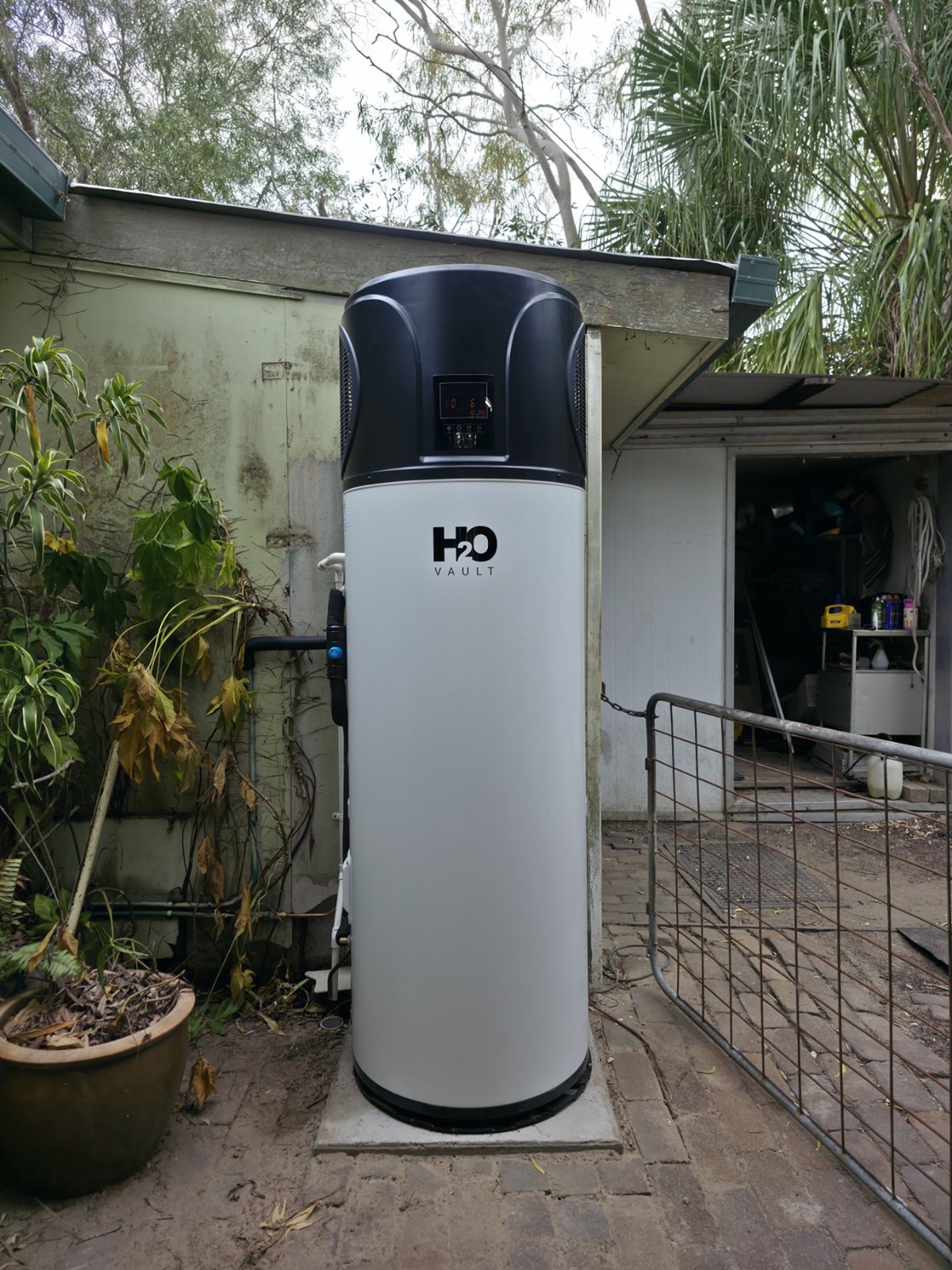
Hot water is one of the biggest single line items on a Capricorn Coast home's electricity bill — about 23% of average Australian household energy use (DCCEEW Your Home, Hot water systems). A heat pump hot water system can shave that line item by 60-75%. Sounds straightforward in the brochure. The reality on the Coast is more nuanced. Our Zone 1 STC rebate is the lowest in Australia, Ergon's Tariff 33 has its own sizing quirks, and most national content gets the local specifics wrong. We're a Yeppoon plumber and we install these systems — this guide walks through the honest numbers, the brands we vouch for, and how heat pump hot water actually pencils out on the Coast.
Key Takeaways
- A heat pump hot water system cuts hot water energy use by 60-75% compared with electric storage (DCCEEW Your Home).
- LTH installs from $5,200 net of STC, like-for-like — either the 285L Thermann or the 280L Rheem Ambipower. Both sit above Ergon's 270L heat pump minimum, so every install qualifies for Tariff 33.
- The Capricorn Coast sits in STC Climate Zone 1 — the lowest rebate tier in Australia, not the highest, despite some national marketing implying otherwise.
- Sizing by Ergon's household-to-litres table for Tariff 33 eligibility is the cleanest method.
- We install Rheem, Thermann, and Rinnai heat pumps.
What is a heat pump hot water system, and how does it work?
A heat pump hot water system uses the same refrigeration cycle as your fridge or air conditioner, but in reverse — it pulls warmth out of the outside air and concentrates it into your hot water tank. Modern units use about 1 unit of electricity to deliver 3-4 units of heat (a Coefficient of Performance, or COP, of 3-4), which makes them the most energy-efficient way to heat water in mainland Australia (DCCEEW Your Home, Hot water systems).
That's a different bit of physics from a traditional electric storage tank. An electric element converts electricity to heat directly — efficient, but a 1-for-1 swap. A heat pump moves heat from the surrounding air. So for every kilowatt you put in, you get three to four kilowatts of hot water out. It's the same physics that runs your fridge, just pointed the other way.
The trade-off: heat pumps are slower. An electric element heats a tank in an hour or two. A heat pump takes most of a day to recover a full tank. That's why sizing matters (more on this below) — you need enough stored hot water to get through your usage between recovery cycles.
Does a heat pump hot water system save money in Queensland?
For a typical four-person Queensland household, yes. A heat pump cuts hot water electricity use by 60-75% compared with electric storage (DCCEEW Your Home) — that translates to a few hundred dollars a year in real running-cost savings, depending on your usage pattern and tariff. Across a 10-15 year unit life, that compounds into several thousand dollars in lifetime savings.
How does that stack up against the upfront cost? At our published baseline of $5,200 for a 280-285L heat pump install (net of STC), simple payback is around 4-6 years. After that, you're banking the savings.
Two things shift that maths in our area:
- Tariff 33 (Ergon's controlled-load tariff for hot water). If you can run your heat pump on Tariff 33 instead of general supply, you cut your running cost further — sometimes by another 30-40%. We cover the Tariff 33 sizing rules in the sizing section.
- Household size. Smaller households (1-2 people) use less hot water, so the absolute dollar savings shrink. Below about 100 litres a day of hot water use, the payback maths gets tight. We're honest about this — see the "when not to buy" section near the end.
The other thing worth saying: these are running-cost numbers, not headline-grabbing rebate numbers. We'll get to STC rebates next — and the news on that for the Coast is mixed.
Is the Capricorn Coast a good place for a heat pump hot water system?
The Coast's mild, year-round climate is actually excellent for heat pump efficiency — these units rarely have to work hard in our temperatures, which means they hit closer to their rated COP than they would in colder parts of Australia. Operating climate: tick.
The catch is the rebate. The Capricorn Coast sits in STC Climate Zone 1, which is the lowest rebate tier for heat pump hot water systems in Australia (Clean Energy Regulator, Postcode zones for air source heat pumps and solar water heaters). Not the highest. The zone numbers are counter-intuitive — lower number means lower rebate, because the zones are based on solar irradiance values that don't favour our latitude on the rebate-calculation model. That sounds backwards for sunny Central Queensland, but that's how the scheme is structured.
We've seen ads from interstate installers framing "Zone 1" as a regional advantage. It isn't. If anyone's pitching you a "biggest rebate" line because you're in Zone 1, double-check the actual STC count against the Clean Energy Regulator's zone map before you sign anything.
Most national heat pump content quietly assumes Zone 4 or 5 rebate values (the southern capital cities). When you see a national brand quoting "$1,000-$1,500 in STC value" — that's not what Capricorn Coast installs receive. Real Zone 1 STC value on a typical 280-285L heat pump sits around $450 at current REC market prices — less than half what the same unit would attract in Zones 4 or 5.
How much does a heat pump hot water system cost in Yeppoon?
At LTH Plumbing, we install heat pumps from $5,200 net of the STC rebate — either the 285L Thermann or the 280L Rheem Ambipower, depending on customer preference and availability. Both are standard like-for-like installs on the Capricorn Coast at the same price tier. The $5,200 includes the unit, our plumbing labour, QBCC Form 4 lodgement, and the condensate drain. Electrical work is quoted separately, because the scope depends on whether your existing circuit needs upgrading. Both options sit comfortably above Ergon's 270L heat pump minimum, so every install we do qualifies for Tariff 33 — the cheapest way to run a heat pump on the Coast. That price sits around the Australian industry average for a properly sized heat pump install (Queensland averages around $4,200 net of STC for entry-level systems, national average around $4,500, prices climbing past $6,000 in cooler states — Solar Choice, Heat Pump Hot Water Systems – A Complete Buyers Guide).
What's included in the from-price
Here's what's actually inside a "from $5,200" install:
- The heat pump unit (Thermann 285L or Rheem Ambipower 280L — your choice)
- Disconnect and removal of your old hot water system
- Mounting and plumbing in the new unit on the same site (same pad, same wall position)
- New PTR valve, tempering valve where required, and pressure-limiting valve if needed
- Condensate drain (every heat pump needs one — see the install section below)
- QBCC Form 4 lodgement to confirm a licensed plumber did the work
- Manufacturer warranty registration in your name
What's not included
What's not included in the "from" price:
- Electrical work. Tariff 33 controlled load is a different circuit to general supply, and any isolation upgrades or new circuits need a licensed electrician. We quote that separately or refer you to a sparky we work with.
- Mounting upgrades. If we need to build a new pad, re-frame a wall mount, or relocate the unit, that adds labour.
- Long condensate runs. Up to about 5 metres of condensate drain is included. Beyond that, extra material and labour apply.
- Unusual sites. Off-grid properties, second-storey installs, tight access — all add to the quote.
The reason we publish a "from" price is that most heat pump quotes you'll see in our area come in over the phone after a sales-style conversation. We'd rather you knew the baseline before you called. If your site adds complexity, we'll explain why on the quote.
How much can I claim back from the STC rebate?
STCs (Small-scale Technology Certificates) are the federal rebate mechanism for heat pump and solar hot water systems in Australia. The number of STCs your install qualifies for depends on the model's rated energy savings and your climate zone — and as we mentioned above, the Capricorn Coast sits in Zone 1, the lowest rebate tier in the country (Clean Energy Regulator, Postcode zones for heat pumps and solar water heaters).
In practical dollar terms: a 280-285L heat pump installed in Yeppoon currently nets around $450 in STC value, depending on the model and current STC market price (Clean Energy Regulator, REC Registry). That $450 is the discount you see on your invoice — we claim the STCs on your behalf and pass the value straight through.
How does the rebate work in practice?
- We claim the STC; you get the discount. When you accept our quote, we register the system with the Clean Energy Regulator, generate the STCs, and assign them to a partner who pays for them. We pass that value through as a discount on your invoice — that's how we can quote a single "from $5,200 net of STC" number instead of splitting the cost into a gross price plus a separate rebate cashback.
- The price is a market price, not a fixed amount. STCs are traded on a market, so the dollar value per certificate moves week to week. Our "from $5,200" includes a reasonable STC value at current rates. If the market shifts between your quote and your install, we'll flag it.
- You don't need to do paperwork. Some rebate schemes ask you to pay upfront and claim back. STC is built into the install price up front.
LTH signed up as a Green Bank partner in April 2026 to handle STC processing directly. The reason we did it: cleaner accounting on the rebate value, faster turnaround on quotes, and we can be honest with customers about exactly what STC is worth on their specific job — rather than relying on a generic "up to $X" claim.
Which heat pump brands do we install?
We install Rheem, Thermann, and Rinnai heat pump hot water systems on the Capricorn Coast. These are the three brands where we have the supplier relationships, warranty backing, and local parts availability we need to confidently stand behind our installs five and ten years down the line.
| Brand | Range we install | Best fit |
|---|---|---|
| Thermann | 285L R290 | One of our two standard "from $5,200" install options. Strong Australian distribution. |
| Rheem | 280L Ambipower | Our other "from $5,200" option. Long-established Australian brand with broad national service network. |
| Rinnai | Enviroflo range | Customers who already trust the Rinnai name from other appliance categories. Quoted on request. |
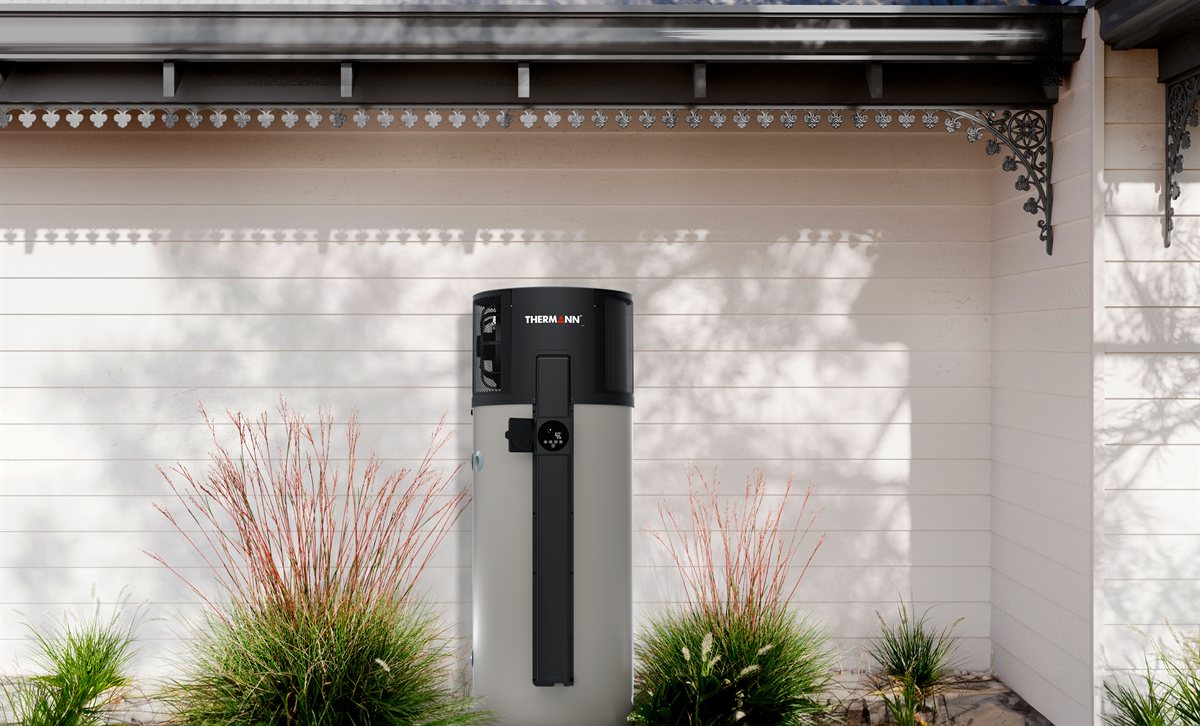
When we look at any heat pump brand, here's what we want to see before we'll put it on your wall:
- Local supplier support. Can we get parts in Yeppoon or Rockhampton without a multi-week wait? Brands with strong Queensland distribution get the tick.
- Honoured warranty. When a claim comes up in year three, does the supplier actually turn up?
- Field track record. How have the units we've installed actually performed? Field reliability matters more than brochure specs.
- Reasonable serviceability. Are common wear parts (anodes, valves, fans) replaceable, or is it a throw-away unit?
If you've got a specific brand in mind that we don't stock, ask us. We may still install it, depending on what supplier support we can arrange. We're not trying to steer you to any one brand — we're trying to put a system on your wall that we'll stand behind in 2031.
How big a heat pump hot water system do I need?
Ergon's official sizing table for Tariff 33 eligibility sets the minimum tank size that qualifies your heat pump for the cheapest running-cost tariff in our area (Ergon Energy, Hot Water Tank Sizes). The headline rule for heat pumps is simple: 270L minimum for Tariff 33 eligibility, scaling to 340L for 6-8 person households.
Here's Ergon's published table for heat pump hot water:
| Household size | Heat pump minimum (Tariff 33 eligible) |
|---|---|
| 1-3 people | 270 L |
| 3-5 people | 270 L |
| 4-6 people | 270 L |
| 6-8 people | 340 L |
Why size off Ergon's table specifically? Because Tariff 33 is the cheapest way to run a heat pump in our area, and Tariff 33 eligibility depends on the tank being big enough to hold a day's hot water through the controlled off-hours. Drop below 270L and the heat pump can't connect to Tariff 33 — which kills the running-cost savings that justify the upfront premium. We'd rather oversize a touch than undersize.
A note on our standard install: we publish a single "from" price — $5,200 net of STC — for either the 285L Thermann R290 or the 280L Rheem Ambipower. Both sit comfortably above Ergon's 270L heat pump minimum, so every system we install qualifies for Tariff 33. We went single-tier (no smaller-tank option) deliberately: undersizing kills Tariff 33 eligibility, which kills the running-cost savings that justify the upfront premium. We'd rather give every customer the right-sized tank for the long-term economics than offer a cheaper-upfront option that costs more to run over 10-15 years.
The biggest sizing mistake we see is the assumption that a heat pump can be sized smaller than the equivalent electric storage because it's "more efficient." It can't. Efficiency is about energy use, not about storage volume. A four-person household needs a 285L tank whether it's electric storage or heat pump — the efficiency savings come from how the water gets heated, not how much you store.
A few other sizing notes for the Coast:
- Holiday homes and occasional-use properties. Don't undersize hoping to save money. An undersized tank that runs out mid-shower for guests is a bad investment.
- Rentals. Size for the worst-case tenant household, not the current one. Tenants change; the tank doesn't.
- Tank water properties. Pump pressure can affect how the heat pump cycles. Worth flagging on the quote.
What's the install process and timeline?
From the moment you accept our quote, a typical heat pump install on the Capricorn Coast takes around 1-2 weeks end-to-end. That covers ordering the unit from our supplier, scheduling the install (usually a half-day on site), the QBCC Form 4 lodgement, and the post-install handover. The actual plumbing on the day is typically 2-4 hours; the electrical side is quoted separately and scheduled by a licensed electrician. Peak season can stretch unit lead times to a couple of weeks, but the install itself stays within the same half-day window. Every install includes a condensate drain — covered below — and we register the manufacturer warranty in your name on the day.
Step-by-step timeline
Here's the step-by-step:
- Quote. We come out, measure up, look at the existing system, the electrical situation, and any site quirks. You get a written quote with the "from $5,200" baseline plus any site-specific extras itemised.
- Acceptance and order. You accept the quote and we order the unit from our supplier. Lead time is usually a few days but can stretch in peak season.
- Schedule. We coordinate a date that works for you and confirm what the electrician needs to do (if anything).
- Install day. We isolate, drain, disconnect, and remove the old hot water system. The new unit goes in on the same site (or a new site if you've requested one). We commission, fire it up, check water temperature, and walk you through the controls.
- QBCC Form 4 lodgement. We lodge a QBCC Form 4 with the Queensland Building and Construction Commission within the required window. You get a copy emailed for your records.
- Warranty registration and handover. We register the unit with the manufacturer in your name and leave you with the manual and commissioning paperwork.
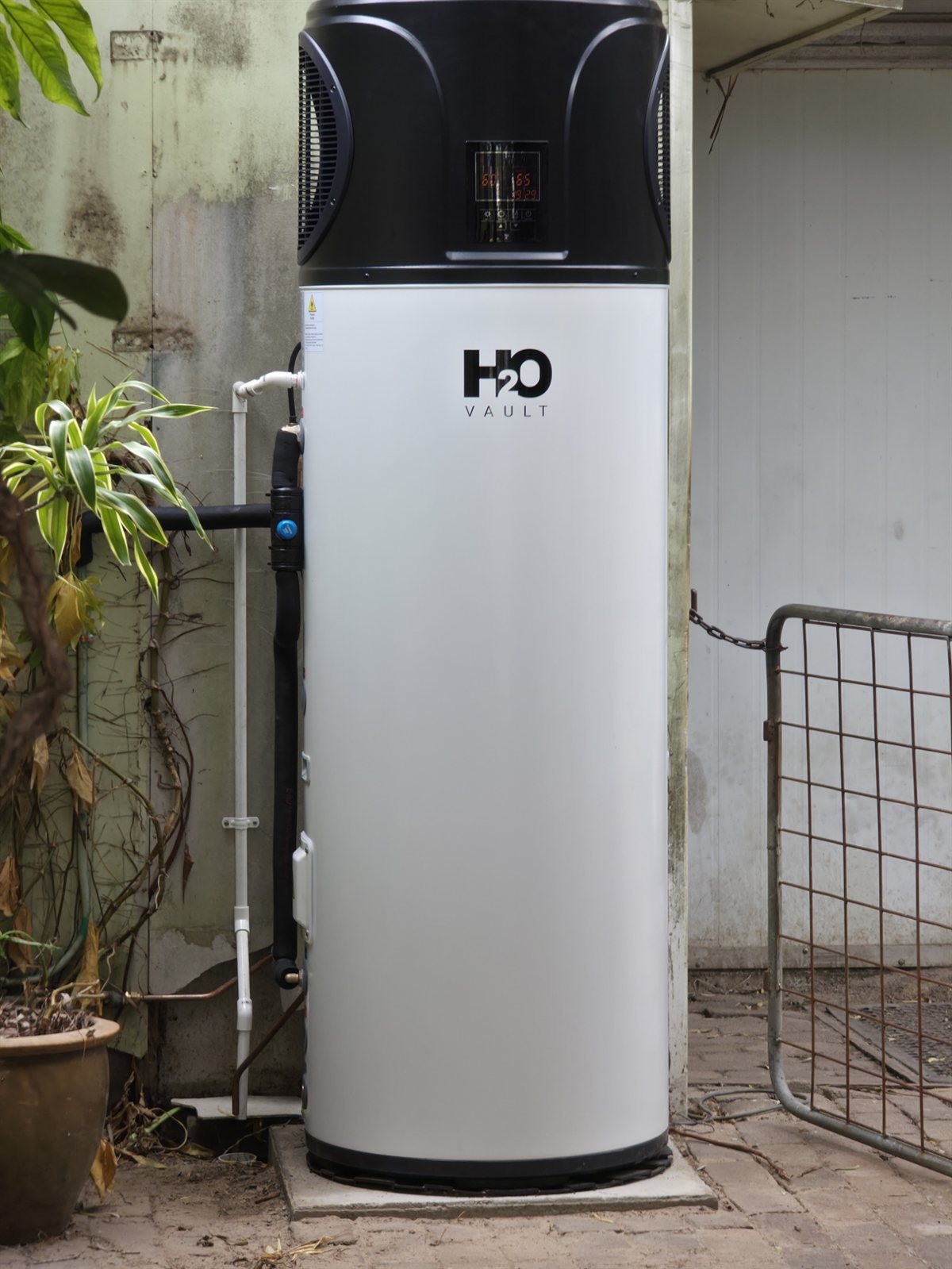
Why every install needs a condensate drain
One install detail worth knowing about: every heat pump needs a condensate drain. As the unit pulls heat out of the air, it pulls moisture out too — and that water has to go somewhere. Usually it's a short run to a tundish, stormwater connection, or garden bed. If your existing electric storage doesn't have a condensate drain in place (and it won't, because electric storage doesn't produce condensate), we'll need to install one as part of the swap. It's a small piece of work, but it's mandatory and it's the most common detail we see skipped on rushed installs.
A plain-English note on QBCC Form 4 lodgement: it's the formal notification to the Queensland Building and Construction Commission that a licensed plumber lodged the install with the regulator. It's your proof that a properly licensed tradie did the work, and it protects you if anything goes wrong later. We lodge it on every job. The correct terminology is "QBCC Form 4 lodgement" — not "compliance certificate" — regardless of what some other quotes might call it.
What are the most common heat pump installation mistakes?
The three most common heat pump install mistakes we see when we're called out to fix someone else's work are: skipping or undersizing the condensate drain, mounting in a spot that violates the manufacturer's clearance requirements, and undersizing the tank for the household. Each one has consequences, and each one is avoidable at quote time.
- Skipping the condensate drain. As we covered above, every heat pump produces condensate. Skip the drain and water pools under the unit, runs down the wall, or stains the slab. Worst case, it voids the warranty and damages the building.
- Wrong mounting position. Heat pumps need air clearance — usually 300-500mm around the inlet/outlet, depending on the manufacturer — and they need a stable, level surface to sit on. We've seen units bolted to flimsy weatherboard, blocked by garden walls, or tucked into corners where they can't get airflow. All three kill efficiency and can void manufacturer warranties.
- Undersizing the tank. Sometimes to fit a smaller wall space, sometimes to shave the unit price. The household then runs out of hot water mid-shower, the unit struggles to recover during the off-peak window, and Tariff 33 eligibility may not stack up. Sizing is cheaper to get right than to fix later.
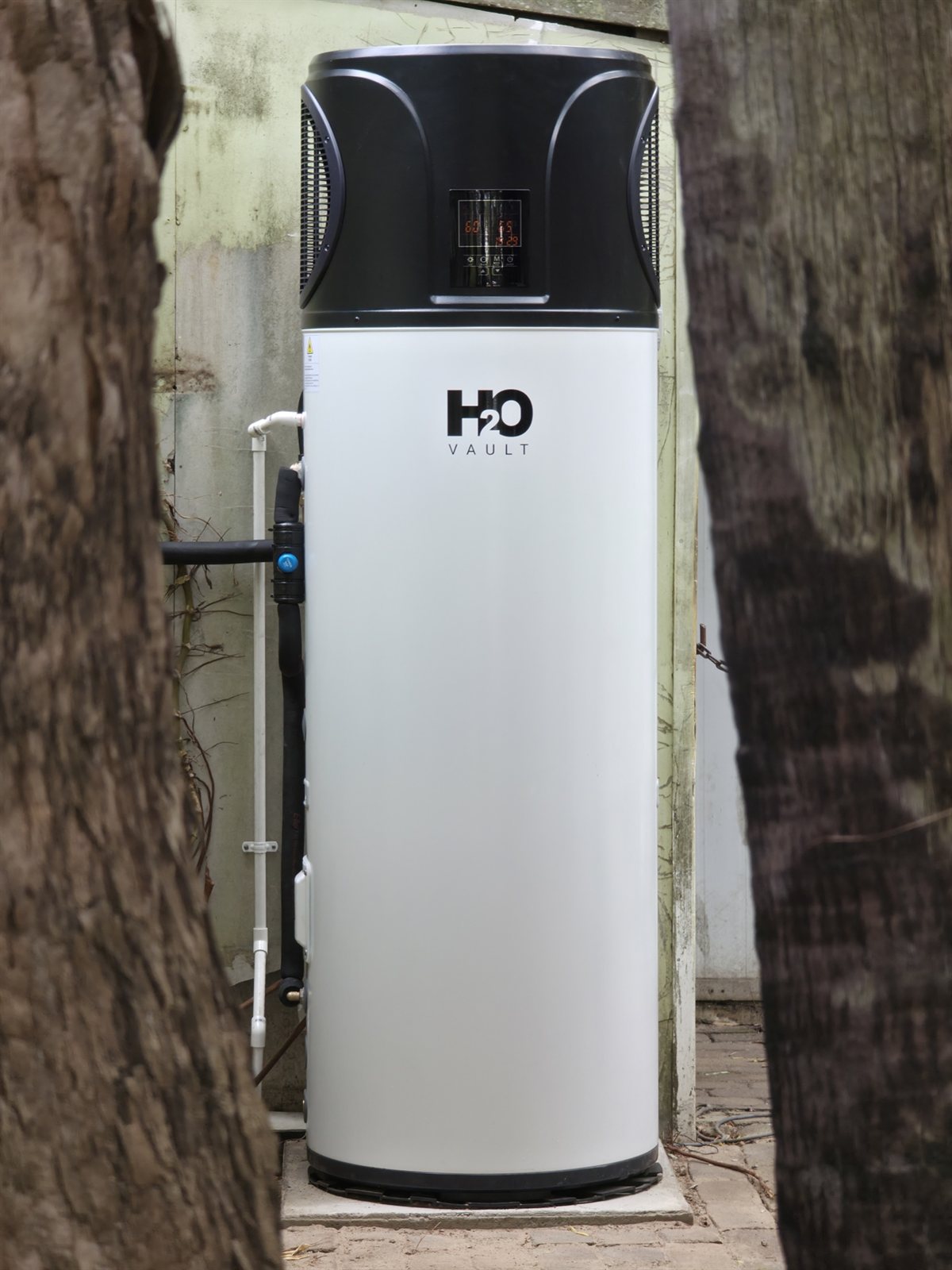
What to ask any installer (us or anyone else) before signing a heat pump quote:
- Where exactly will the unit be mounted, and what's the clearance from walls, fences, and eaves?
- How will the condensate drain be routed and terminated?
- What tank size are you recommending, and does it meet Ergon's Tariff 33 table?
- Are you lodging the QBCC Form 4 and registering the warranty in my name?
When is a heat pump NOT the right choice?
A heat pump isn't always the right answer, and we'd rather tell you that upfront than oversell you a system that won't pay back. Four scenarios where you should think twice:
- Very small households (1-2 people, low hot water use). The energy savings shrink with the volume of hot water you use. If your current electric storage hot water bill is already under about $30 a month, a heat pump's running-cost savings won't cover the upfront premium over a like-for-like electric storage replacement in any reasonable timeframe.
- Tight-budget like-for-like replacement. If your existing electric storage tank has just died and your budget is genuinely tight, a like-for-like electric replacement is fine. Save up and switch to a heat pump on the next replacement cycle. The "right" hot water decision is the one that fits your situation, not the one with the best brochure.
- Properties with great north-facing roof aspect and short pipe runs. A well-positioned solar hot water system with electric boost can outperform a heat pump on running cost, though usually at a higher upfront. If you've got abundant unshaded north-facing roof and a short straight pipe run to the tank location, ask for a solar quote too. We install both and we'll be honest about which fits.
- Off-grid and remote properties. Heat pumps run on electricity, so off-grid means your standalone power system has to size for the heat pump's compressor draw. Whether that's a heat pump or another option depends on your power setup — not a generalisable answer.
The honest framing for the Capricorn Coast: heat pump hot water wins for the majority of 3-plus person, mains-connected, suburban Yeppoon, Rockhampton, and Emu Park households. For the edge cases — singletons, very low usage, off-grid, or budget-constrained like-for-like — there are better answers, and we'll tell you so.
Frequently asked questions
Is a heat pump hot water system worth it on the Capricorn Coast?
For most three-or-more-person households on the Capricorn Coast, yes — typical payback is 4-6 years on the upfront cost, helped along by our mild year-round climate even with the lower Zone 1 STC rebate. The exception is one-or-two-person households, where the savings shrink and the payback maths stretches out. We'll tell you honestly during the quote whether it stacks up for your situation.
How long does a heat pump hot water system last?
Quality heat pump hot water systems typically last 10-15 years, depending on water quality, install quality, and manufacturer. Tanks usually carry a 5-10 year warranty; compressors are typically 3-7 years. Our Coast water (mostly town supply, some tank-fed properties) is generally heat-pump-friendly. The biggest lifespan risk is poor install quality, not the unit itself.
Do heat pumps work in cold weather?
Yes. Modern heat pumps work efficiently down to about 5°C ambient, and Yeppoon's coldest months still average overnight lows around 15°C (Bureau of Meteorology, Yeppoon climate averages) — well above the threshold where heat pump efficiency starts to suffer. Cold-climate-specific heat pump models exist for places like the Tablelands or Tasmania, but they aren't necessary in our area.
Can I install a heat pump on Ergon's Tariff 33?
Yes, most heat pumps can run on Tariff 33 — Ergon's controlled-load tariff — if the tank is sized large enough to hold a day's hot water through the off-hours. Sizing per Ergon's household-to-litres table is the key. Tariff 33 is the cheapest way to run a heat pump in our area, so we'd recommend it for most installs.
Do I need an electrician to install a heat pump hot water system?
Yes. The plumbing side is ours; the electrical side needs a licensed electrician to confirm the circuit, isolate, and connect dedicated supply (Tariff 33 controlled load is a different circuit to general supply). We coordinate the timing on most jobs — electrical is quoted separately because it depends on your existing circuit.
In summary
Heat pump hot water is the most energy-efficient way to heat water in mainland Australia, and for most three-or-more-person households on the Capricorn Coast it pays back within 4-6 years. Our climate is genuinely well-suited to these systems. The catch is the Zone 1 STC rebate — the lowest in Australia, not the highest, despite what some national ads imply — and the install quality really does matter. Condensate drain, mounting, sizing: get them right or you'll pay for them later.
At LTH we install Rheem, Thermann, and Rinnai heat pumps from $5,200 (285L) net of STC, like-for-like, lodged with the QBCC and warranty registered in your name. Every install qualifies for Tariff 33. If your situation is genuinely better suited to electric storage, solar hot water, or something else, we'll say so on the quote.
Want an honest quote? Call Luke on 0455 869 383 or request a heat pump quote. We cover Yeppoon, Rockhampton, Emu Park, and surrounding suburbs.
Sources
- DCCEEW Your Home — Hot water systems. Retrieved 2026-05-16.
- Clean Energy Regulator — Postcode zones for air source heat pumps and solar water heaters. Retrieved 2026-05-16.
- Clean Energy Regulator — REC Registry (live STC market data). Retrieved 2026-05-16.
- Ergon Energy — Hot Water Tank Sizes. Retrieved 2026-05-16.
- Solar Choice — Heat Pump Hot Water Systems – A Complete Buyers Guide. Retrieved 2026-05-16.
- Queensland Building and Construction Commission — Form 4 lodgement requirements (qbcc.qld.gov.au — verify exact page URL before publish). Retrieved 2026-05-16.
- Bureau of Meteorology — Yeppoon climate averages (station 033294). Retrieved 2026-05-16.
Need a Hand with Your Plumbing?
LTH Plumbing — your local Yeppoon and Rockhampton plumber.
Get a Free Quote